04.01.2026
Ingredient Innovation
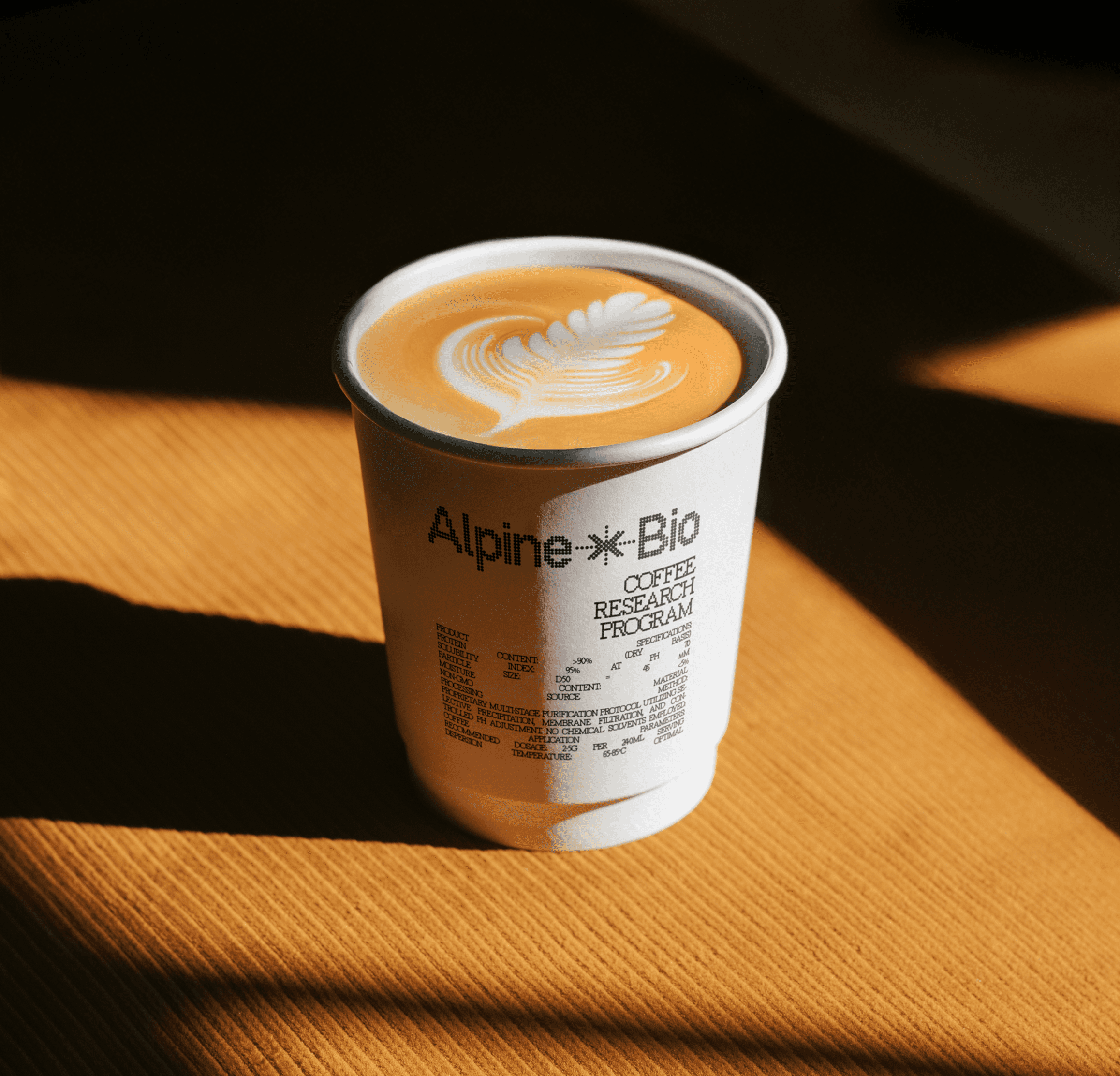
The latte art collapses. The cappuccino foam dissipates into a flat, oily slick. Every plant-based creamer formulator knows this failure mode intimately.
Dairy foam works because of casein. Casein micelles migrate to air-water interfaces, forming elastic films around bubbles that resist coalescence and drainage. The protein's amphiphilic structure, hydrophobic regions anchoring to air, hydrophilic regions facing water, creates stable foam architecture that holds from pour to serve to drink.
Most plant proteins can't replicate this. Soy, oat, and pea proteins either lack the surface-active properties, denature under steam heat, or produce foams that collapse within seconds. The industry workaround: stabilizer systems, hydrocolloids, and emulsifier blends that approximate foam structure without the underlying protein functionality.
It works. Barely. The ingredient list bloats. The mouthfeel shifts. The foam still isn't right.
The problem isn't plant protein. The problem is using the wrong plant protein.
FSPI delivers emulsification capacity that holds oil-in-water dispersions stable across temperature gradients, fridge to hot coffee, without synthetic emulsifiers. For foam-forward applications, plant-grown casein provides the actual protein responsible for dairy foam behavior. Not an analog. Not an approximation. Casein expressed in soybeans.
The result: foam that forms, holds, and pours. Stable through steam. Clean on the label.
Plant-based coffee creamers have been solving the wrong problem — adding stabilizers to compensate for protein limitations. The real solution is better protein.